
• DE global
  • global
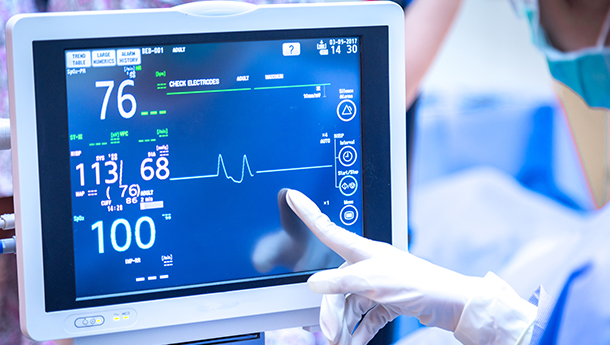
Doctor with face mask looking at a screen, X-ray images can be seen in the background

Batteries for medical technologies

Custom battery packs

Discover our diverse customised battery packs.

LiBrick Standard

The LiFePO4 batteries from our own LiBrick brand are ideally suited for your applications in medical technology.

SUN Battery SB12-7.2LV0

The SUN Battery SB12-7.2LV0 is well suited for applications in medical technology.

Medical technology & medical devices

Medical technology describes the area that lies between the two disciplines of medicine and engineering. This is where aids and medical devices are developed that are used both in the treatment of patients and in the laboratory. The framework conditions for the development of medical devices are significantly more dynamic and complex than in many other sectors. One reason for this is the large number of regulations that exist in medical technology, as human lives are at stake in the event of an emergency. Therefore, special requirements are placed on all components of the device.

A large number of devices are used in medical technology, which must also function wirelessly. This makes operation easier, increases the operating radius and minimises accidents. 

Our bestseller for applications in medical technology:

SUN Battery SB12-7.2LV0

AGM battery | 12 V | 7.2 Ah (C20) |

sealed | maintenance free | 6-9 years |

measurements: 151 × 65 × 99 mm |

T2 (6.3 mm) connector |

weight: 2.4 kg | VdS G112110

 
LiBrick S12-7.5 T2
LiBrick S12-7.5 T2

Type: LiFePO4

Nominal Voltage: 12.8 V

Capacity: 7.5 Ah @ 0.2C

Continuous discharge current: 15 A

Peak discharge current: 45 A

Peak discharge duration: 5 s

Connection: T2

Housing: ABS, UL-94 V-0

Serial connection: /

Parallel connection: max. 4

Size: 151 x 65 x 92 mm ±2mm (+2mm T2)

Weight: 1.1 kg

 
LiBrick S12-150 CAN
LiBrick S12-150 CAN

Type: LiFePO4

Nominal Voltage: 12.8 V

Capacity: 150 Ah @ 0.5C

Continuous discharge current: 150 A

Peak discharge current: 250 A

Peak discharge duration: <3 s

Connection: M8

Housing: ABS, UL-94 V-0

Serial connection: /

Parallel connection: max. 4

Size: 335 x 175 x 190 mm ±2mm (+ 15-65mm Weipu)

Weight: 15.5 kg

 
LiBrick S24-10 CAN
LiBrick S24-10 CAN

Type: LiFePO4

Nominal Voltage: 25,6 V

Capacity: 10 Ah @ 0.2C

Continuous discharge current: 20 A

Peak discharge current: 30 A

Peak discharge duration: <4 s

Connection: M5

Housing: ABS, UL-94 V-0

Serial connection: /

Parallel connection: max. 4

Size: 181 x 77 x 168 mm ±2mm (+ 15-65mm Weipu)

Weight: 2.7 kg


What requirements apply to rechargeable batteries for medical technology?

Rechargeable batteries used in medical devices must fulfil special requirements. These include, above all, a high level of safety and reliability. These special requirements are briefly summarized for you here:

  • Reliable: Just like the medical device itself, the battery inside it must also be very reliable. There must be no sudden failures of the device and a permanent power supply must be guaranteed.
  • Durable: Rechargeable batteries in medical technology must supply energy over a long period of time and should therefore be as durable and cycle-resistant as possible. This also reduces maintenance and therefore the time during which the device cannot be used.
  • Stable and safe: In order to cope with everyday clinical and laboratory work and long-term use, rechargeable batteries for medical technology should be particularly stable. They must also be safe and protected against leakage and have a high level of operating safety.
  • Biocompatible: As some rechargeable batteries are implanted into the body in the medical sector, they must be highly biocompatible so that there is no rejection reaction from the body. Of course, this does not apply to all medical rechargeable batteries.
  • Certified: In order to be authorised to manufacture and supply rechargeable batteries for medical technology and medical devices, the manufacturing companies must be certified according to certain standards. These include ISO9001 certification.
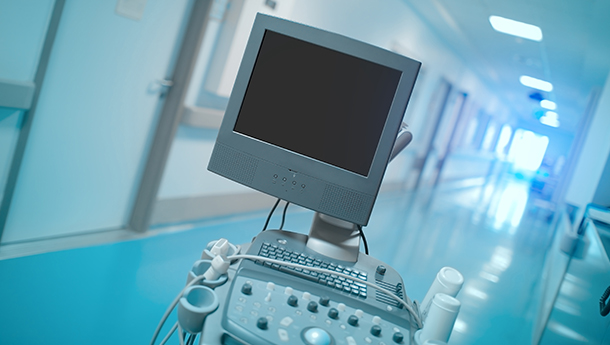
Ward round trolley in a hospital corridor

In which devices are rechargeable batteries used in medical technology?

High-quality rechargeable batteries are required in medical technology and laboratories for a wide range of applications. A distinction can be made here as to whether a medical device is supplied with energy completely, partially or only for a certain time with the help of rechargeable batteries. Often, medical devices are only backed up by a rechargeable battery in the event of a power failure so that they function until the emergency power generator is put into operation. In general, rechargeable batteries can be found in medical technology in the following devices, for example:

  • Ventilators, defibrillators and dental laboratory equipment
  • Patient monitors for mobile use
  • Infusion pumps, electronic pipettes and syringe pumps
  • Patient beds and wheelchairs
  • CPAP devices, ECG devices and ultrasound devices
  • Hearing aids, pacemakers and insulin pumps
  • Surgical instruments and clinical thermometers

How do I care for rechargeable batteries in medical and laboratory accessories properly?

Batteries for medical laboratory equipment are usually nickel-metal hydride or lithium-ion batteries. It is crucial to avoid extreme discharge and overcharging: the ideal state of charge during operation is 30–70 per cent, and charging should take place at 5–45 °C. When storing Li-ion batteries, keep them at 5–10 °C and at 40–50 per cent charge (never below 0 °C). As a general rule: charge, store and replace batteries in accordance with the manufacturer’s instructions – this is the most effective way to prevent failures.

Customised batterie packs for medical technology from Battery-Kutter

Do you have special requirements for your battery pack for the medical sector? If you cannot find what you are looking for in most standard ranges, we will be happy to help you with our customised battery pack assembly. Our expert team of highly trained technicians, engineers and project management staff will advise and support you from the initial idea to your finished battery pack. In our battery pack folder, you can familiarise yourself in advance with the processes at our company. 

FAQ

Which button cells are considered particularly safe for medical equipment?

Silver oxide cells (SR types) are considered particularly safe – they do not leak, provide a constant voltage and remain stable at room temperature. Lithium button cells (CR types) are also recommended, as they are long-lasting and corrosion-resistant.

What are the best small batteries for medical wearables worn on the skin?

Small, lightweight lithium-polymer (LiPo) and lithium-ion batteries, as well as rechargeable button cells (e.g. LIR types), are particularly suitable for medical wearables worn on the skin. They offer high energy density despite their low weight, can be fitted flat and close to the body, and, thanks to their compact design, are well suited to medical wearables worn on the skin.

Which small batteries are safe for medical devices?

The most commonly used are silver oxide button cells (e.g. SR44, SR626), which offer a stable voltage and high energy density. Lithium button cells (e.g. CR2032) are used in devices such as pacemakers, as they are extremely long-lasting and reliable.

What are medical batteries?

Rechargeable and non-rechargeable batteries for medical devices with specific requirements: reliable, long-lasting, stable, safe and – in the case of implantable devices – biocompatible. Manufacturers must be certified to ISO 9001.

What type of battery is used in medical devices?

Primarily nickel-metal hydride (NiMH) rechargeable batteries for small devices with low power consumption, as well as lithium-ion rechargeable batteries. For larger devices (ventilators, patient monitors), LiFePO4 batteries (LiBrick) and AGM lead-acid batteries (SUN Battery) are also suitable.

Are you also interested in other areas of application? Please find more information here:

Emergency power and UPS systems
 
Emergency and safety lighting
 
Hazard alarm systems
Learn more