• DE global
  • global
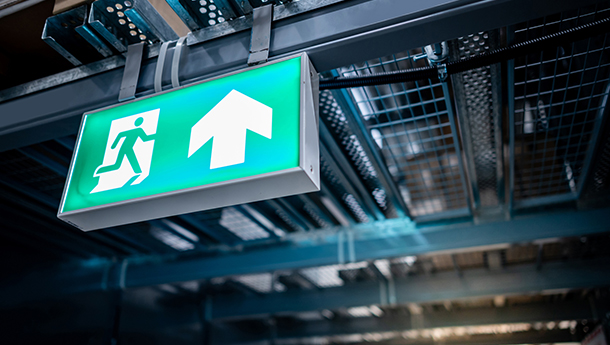
Sign for an emergency exit

Batteries for emergency and safety lighting

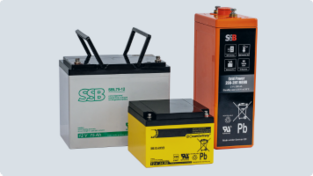
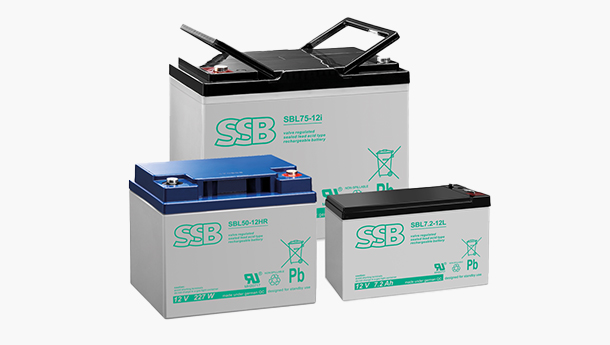
SSB Battery SBL

Thanks to their compact design and low capacity gradation, the SSB SBL 12V batteries are ideal for emergency and safety lighting.

SSB Battery Grid Power

The SSB Battery Grid Power series offers maintenance-free high-temperature lead-acid batteries, ideal for reliable emergency and safety lighting.

SSB Battery PLP

The SSB Pure Lead Power series boasts a long service life thanks to TPPL technology.

LiBrick Standard

Our LiFePO4 batteries in lead housings are the ideal solution for applications with high energy and performance requirements.

Emergency exit sign hanging from the ceiling and pointing forwards

What is emergency lighting and how does it work?

Emergency lighting is essential in the event of a power failure in public buildings. It protects against accidents and panic and enables people to leave the building and get to safety in an emergency. The lighting must function reliably, reach its maximum brightness in a short time and remain effective thanks to a rechargeable battery.

It is therefore particularly important that the emergency lighting with rechargeable battery is a second lighting system – independent of the general supply. A safety power source or fire-retardant cabling is essential here. The safety power source, also known as a backup power source, can be a generating set or battery system. 

Our bestseller for your safety lighting:

SSB Battery SBL18-12i
AGM battery | 12 V | 18 Ah (C20) | sealed | maintenance free | 10-12 years | measurements: 181 × 77 × 167 mm | F-M5 internal thread | weight: 5.0 kg
 
SSB Battery SBL28-12i
AGM battery | 12 V | 28 Ah (C20) | sealed | maintenance free | 10-12 years | measurements: 165 × 125 × 175 mm | F-M5 internal thread | weight: 8.6 kg
 
SSB Battery SBL75-12i (sh)
AGM battery | 12 V | 75 Ah (C10) | sealed | maintenance free | 10-12 years | measurements: 258 × 166 × 215 mm | F-M6 internal thread | weight: 24 kg
 
LiBrick S12-7.5 T2
LiBrick S12-7.5 T2
Type: LiFePO4 Nominal Voltage: 12.8 V Capacity: 7.5 Ah @ 0.2C Continuous discharge current: 15 A Peak discharge current: 45 A Peak discharge duration: 5 s Connection:…
 
banne-bg

Find the right products for your safety lighting

What types of emergency lighting exist?

Emergency lighting is an umbrella term and is subdivided into safety lighting and backup lighting.

Backup lighting ensures the continuation of an ongoing activity that cannot be interrupted, such as an operation in a hospital. In the event of a power failure, backup lighting provides sufficient light to complete a task – in this case it is also referred to as a permanent circuit.

In the case of emergency lighting, there is a standby circuit, i.e. the emergency lighting is switched on in the event of a power failure. Safety lighting for escape routes, or emergency exit lighting is a very well-known example. The green and white escape sign luminaires with a stylised person and an arrow pointing in the direction of escape are a globally recognised pictogram and form a building's safety guidance system. There is also anti-panic lighting, which ensures adequate visual conditions, and safety lighting for workplaces with special hazards.

Which batteries are suitable for emergency lighting?

The choice of battery for battery-powered emergency lighting depends on various factors. As batteries have a limited service life, their capacity may decrease over the years, which has a negative impact on the reliability of the emergency lights. Ambient temperatures and the type of installation at the site also influence battery performance. This depends on the dimensions of the batteries and, in addition, on whether it is possible to install the batteries in battery cabinets or safety cabinets. Depending on the chemical composition of the battery, an electrolyte-resistant coating on the floor or special ventilation of the room may be required.

For emergency lighting with high reliability, good performance and a long service life – even under difficult conditions if necessary – a lead-acid battery is recommended. SSB Battery batteries are particularly suitable for applications with a long autonomy time for emergency lighting and safety lighting. We also have a solution for you if you prefer pure lead batteries. Our SSB PLP series offers you the performance you need for emergencies. 

Or do you prefer lithium-ion batteries? After all, lithium-ion batteries represent the latest generation of emergency lighting batteries. If so, our LiBrick brand is the perfect choice for you. Not only are these batteries lighter than lead-acid batteries, they also often achieve a higher cycle life and therefore last longer. However, modern lithium batteries are also more expensive to buy.

Another option is to use a battery pack. We offer you the industry standard connections for your battery packs as a basic equipment. This includes JST and Molex connectors, for example. In addition to ready-made packs, Battery-Kutter also offers you the option of configuring your own customised battery pack. Benefit from our 30 years of experience in the development of customised battery packs. We not only focus on the specific selection for your application, but also on the customisation of modern monitoring and safety electronics as well as the appropriate charging technology.

Consultancy is the core of our business and our well-trained technicians and engineers are the backbone of our company! We look forward to working with you to find a customised solution!

Do you still have any questions? Give us a call and we will be happy to help you: +49 40 401 161-0

When is emergency lighting mandatory and where is it required?

Emergency lighting is mandatory in certain public buildings and facilities to protect people in the event of an emergency. The lighting and signs must be recognisable in the event of a power failure or heavy smoke in the event of a fire and ensure sufficient lighting. For example, emergency exits, first aid and extinguishing equipment must be labelled and escape and rescue routes as well as hidden dangers must be illuminated. The regulations in buildings depend, among other things, on the size of the facility and known risk factors as well as many other conditions. In the following, we will therefore show you a few criteria for workplaces where safety lighting is required:

  • Workplaces that are frequented by people (restaurants, railway stations)
  • Workplaces that accommodate a large number of people, floors, winding escape routes or hazards and accident risks (high-rise buildings)
  • Workplaces that require people to cross large spaces (entrance halls, open-plan offices)
  • Workplaces that do not have daylight (sales rooms, workshops)

The following escape routes and rooms should always have extensive emergency lighting:

  • Corridors and stairwells required for escape and rescue routes as well as steps
  • Rooms between necessary stairwells and stairwell extensions
  • Exits and exits to the outside (emergency exits and emergency exits)
  • Rooms without daylight
  • Lifts and lift lobbies

FAQ

Does the battery discharge when the emergency lighting is switched on?

Yes – in the event of a power cut, the emergency lighting is powered by the battery, which discharges as a result. Once mains power is restored, the battery recharges automatically, which is why high cycle stability and a long service life are particularly important for the batteries used. 

Welche Art von Batterie wird in einer Notleuchte verwendet?

In Notleuchten kommen hauptsächlich wartungsfreie AGM-Blei-Säure-Batterien zum Einsatz, da sie eine hohe Zuverlässigkeit und eine lange Lebensdauer von bis zu 12 Jahren bieten. Alternativ eignen sich LiFePO₄-Lithium-Batterien, da sie leichter sind und eine höhere Zyklenfestigkeit aufweisen.

How long do battery-powered emergency lights last?

High-quality AGM lead-acid batteries for emergency lights, such as the SSB Battery SBL series, have a service life of 10 to 12 years. LiFePO4 lithium batteries often last even longer due to their higher cycle life, but are more expensive to purchase.

How long must emergency exit lights remain lit?

Emergency exit lights must remain lit for at least 1 hour in the event of an emergency – this is stipulated by the relevant standards, in particular DIN VDE V 0108-100-1. Depending on the type of building, the prescribed rated operating time may be extended to more than 1 hour.

Are you also interested in other areas of application? Please find more information here:

Emergency power and UPS systems
 
Hazard alarm systems
 
Intralogisitcs