



 +49 40 401 161-079
 info@battery-kutter.com
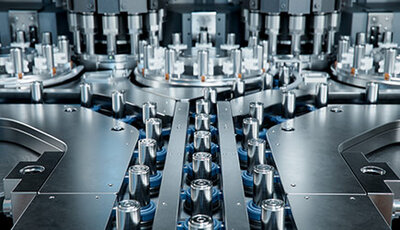
With €30 million raised by Univercell in a funding round, a new production facility is being built in Schleswig-Holstein, where around 50,000 conventional round cells are initially set to be manufactured each month from June onwards. The company is promoting itself on the basis that it develops and produces battery cells entirely in Europe.
Who is behind Univercell?
Univercell was founded in 2019 by Stefan Permien and Marius Strack; the Kiel-based start-up now employs 83 people. According to the founders, the team has systematically built up its own technological expertise over the past few years, whilst also having to cope with setbacks. Strategically, Univercell is committed to an independent European solution and has deliberately chosen not to collaborate with Chinese manufacturers, who currently dominate the market.
The company has been active in battery cell technology for several years. Since November 2020, Univercell has been manufacturing electrode foils at a plant not far from Kiel. These are a key component for energy storage in lithium batteries. In 2025, the start-up achieved turnover in the tens of millions. The new round of funding is seen as a crucial step towards establishing itself permanently as a battery cell manufacturer and thus building trust with customers.
What are Univercell’s plans?
In the long term, the management sees the company’s future clearly in the battery business. Production capacity is to be expanded gradually without costs rising at the same rate. Univercell expects annual cell production of around 1.3 gigawatt hours by 2027.
What is the competitive landscape like?
With this production volume, the company would rank among the larger suppliers of specialised battery cells in Europe. In Germany, there are only a few comparable manufacturers in this niche segment, including V4Smart, a Porsche subsidiary, and Leclanché. A direct comparison with producers for the mass market, such as for electric vehicles, is not meaningful, however: industry leader CATL produced more than 400 times as much in 2025 alone as Univercell’s planned cell production for 2027.
According to the founders, Univercell already has a full order book; most recently, contracts worth tens of millions of euros were signed with customers from the US. The company specifically targets markets that value independent supply chains. At the customer’s request, the entire value chain can even originate from Europe or North America.
Its customer base includes companies from the satellite and aerospace sectors, the medical technology sector, and operators of critical infrastructure. Power tools are also among the areas of application. In this sector, the cells offer a significant advantage: according to the company, they enable a weight reduction of 15 to 20 per cent compared to competing products.
In addition to German SMEs, public investors such as the Deeptech & Climate Fund (DTCF) and the European Innovation Council are also involved in financing the new plant. The background to this is Germany’s continued high dependence on imports for lithium batteries, particularly as industry figures show that only a small proportion of the batteries used in Germany are produced domestically. When putting together portfolios, the focus is on value chains: This benefits competitiveness and offers the potential to reduce CO2 emissions, according to an expert advisor at the DTCF.
To counter the failed efforts of recent years to build up capacity for German battery production, the founders of Univercell are calling for further financial support. Only in this way, they argue, can the country become independent of Asian imports.
Image: Shutterstock
Source: handelsblatt.com, Tom Thiele, 10.03.2026